Therapeutic support
A safe space to pause and look calmly at what you are going through, combining conversation with the body, breath and creativity.

What is therapeutic support?
It is a safe, non-judgemental space to pause and look calmly at what you are going through. It is not about giving you answers or telling you what to do, but about walking beside you while you find your own.
From a humanistic perspective, the process does not happen only in the head: the body, the breath and creativity also speak to us. So each session combines conversation with simple practices that help you feel, let go and come back to yourself.
How I can support you
01Grief after the death of a loved one+
Someone you love has died and, while the world carries on, you feel your life has stopped. The pain may overwhelm you, you may feel empty, or you may feel nothing at all, and that can be confusing too.
Here you will find a safe space to talk about death, life and love, and to express pain through the body, the breath and creativity when words fall short.
02Trauma, illness and life crises+
You are going through a traumatic experience, or still feel the effects of something that happened long ago: an illness, an accident or a sudden change in your circumstances.
At your own pace, we can begin to separate the responses that experience left in you from who you are. This can help you feel safer in your body and come back to yourself with trust and warmth.
03Change, loss and separation+
A separation, a job change, a move, becoming a mother or a stage of life coming to an end has left you without solid ground. It is hard to know what you feel and what you need.
Here you will find a place to pause, put words to what is shifting and understand what no longer makes sense and which new needs are emerging.
04Self-esteem, identity and inner worth+
You judge yourself harshly, demand more than you can give, or feel you are never enough. It is hard to allow yourself to be who you are.
You will find tools to look at your inner dialogue and build a kinder, more trusting relationship with yourself.
05Relationships, communication and boundaries+
It is hard to say what you need, you say yes when you want to say no, or you repeat the same patterns with your partner, family or at work.
You will find resources to recognise your needs, communicate them more clearly and understand how you relate to others.
Words, body and creativity
I combine conversation with practices that involve the body and creativity, because understanding what is happening rationally is not always enough to ease it.

Talking and understanding
We explore what lies beneath what worries you and which thoughts shape how you interpret your experience, to gain clarity and freedom to choose.
Feeling and releasing
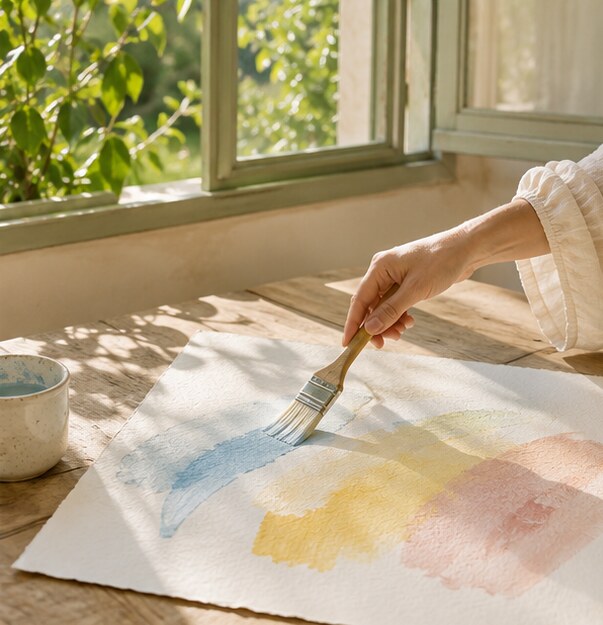
Movement, breath, visualisation and artistic expression to release pain and make visible what words cannot say. No artistic skill needed.

Tools for everyday life
You take home short movement, breathing and meditation practices to support you between sessions.
Inner support
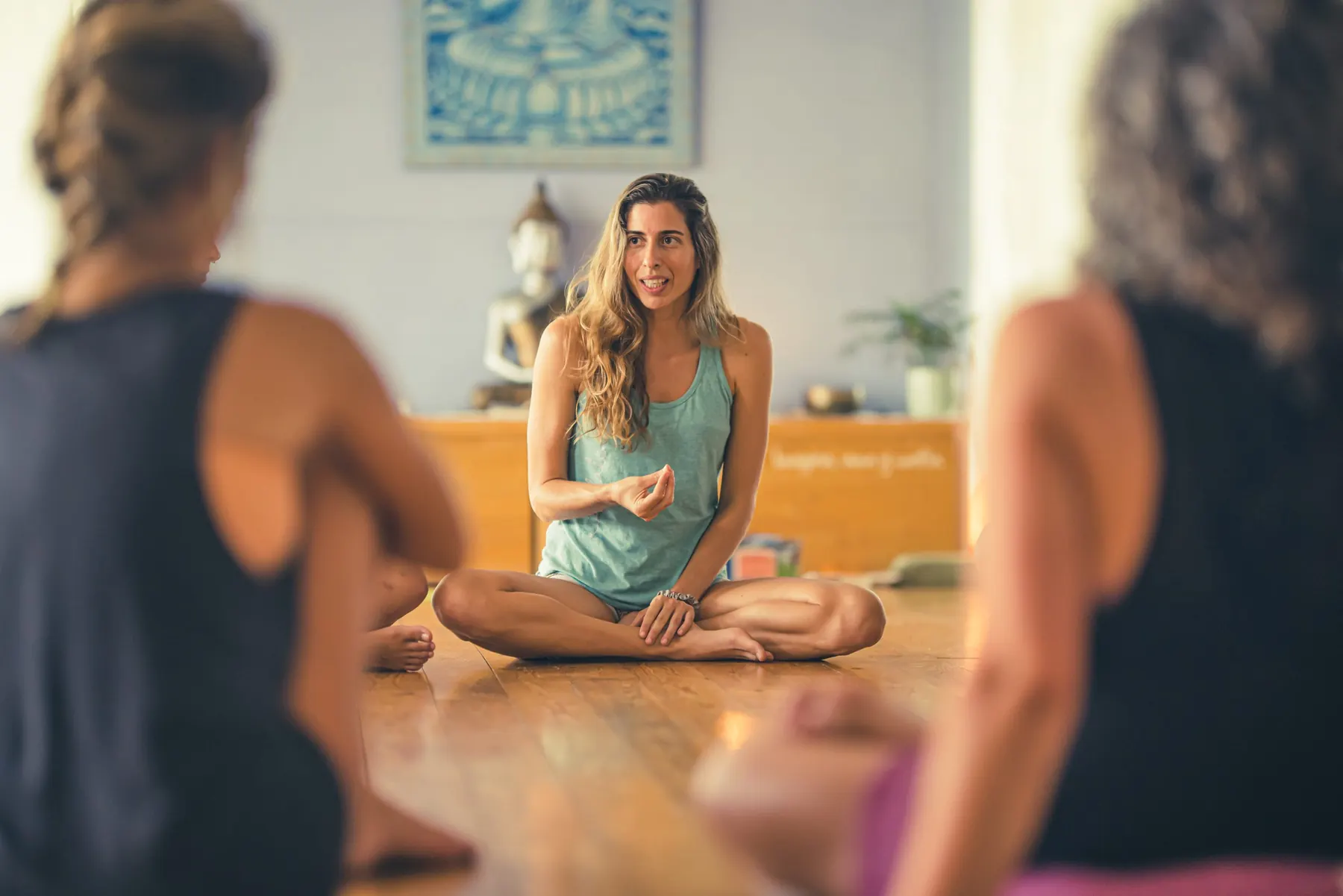
From a good relationship with yourself, it is easier to face change, know what you need and ask others for support.
Each session is different and adapts to how you arrive that day.
The foundations of my work
My way of working brings together approaches that share one idea: each person holds the resources to grow and heal, and the role of the companion is to create the conditions for them to emerge.
Humanistic psychology
Based on unconditional acceptance, empathy and authenticity. I don’t see you through a diagnosis, but as a whole person, with your own story and your own pace.
Gestalt perspective
Focuses on the here and now: what you feel, what you notice in your body, what you need right now. Becoming aware is the first step towards doing something differently.
Body, breath and movement
Twenty-one years of yoga and meditation have taught me that body, mind and emotion are inseparable. We work with breath and movement to regulate the nervous system.
Artistic expression
Colour, shape, writing or photography are a symbolic language that reaches where words cannot. It’s not about making something beautiful, but about giving form to what you feel.
Self-compassion
Learning to treat ourselves with the same kindness we would offer someone we love. One of the most powerful tools for holding pain without judging ourselves.
Meditation and presence
Short mindfulness practices that help us observe thoughts and emotions without getting caught in them, and find moments of calm in the middle of the storm.

What a process looks like
First meeting
We get to know each other, you tell me what brought you here and I answer your questions about how I work. No commitment.
Mapping the way
We put words to what you need and what you would like to change. We agree on format, frequency and place.
Sessions
Each session adapts to how you arrive: conversation, breath, movement, art or visualisation. You take home small practices.
Integrating and closing
We look back on the path, recognise the resources you have found and prepare the closing when it feels right.