Everyday resources
Simple ideas and practices to understand emotions, calm the body and treat yourself with more kindness.

Emotions are messengers
No emotion is good or bad. Each one brings information about what is happening and what we need. In grief they tend to appear mixed and changing.

Sadness
Tells us we have lost something important.
NeedsTime, stillness and comfort.
Anger
Signals injustice or a crossed boundary.
NeedsTo be heard and find a safe outlet.
Fear
Alerts us in the face of uncertainty.
NeedsSafety, information and company.
Guilt
Appears when we think we could have done something differently.
NeedsTo look at it kindly and, sometimes, forgive ourselves.
Longing
It is the other face of love.
NeedsA place to express the bond: rituals, memories, words.
The body remembers too
Difficult experiences are not stored only in memory: they are also held in the body. We feel them as a knot in the stomach, pressure in the chest, shallow breathing or a constant sense of alert.
When something overwhelms us, the nervous system can leave what is called the window of tolerance: towards hyperarousal (anxiety, restlessness, irritability) or hypoarousal (disconnection, apathy, feeling nothing).
Breathing, mindful movement and attention to sensations help us come back to that window, where we can feel without being overwhelmed. That is why body work is an essential part of the process.

Treat yourself as you would treat someone you love
Psychologist Kristin Neff describes self-compassion as having three components. In painful moments, they help us hold ourselves instead of judging ourselves.
Kindness
Speaking to yourself with warmth instead of criticising yourself for how you feel or how you are coping.
Common humanity
Remembering that suffering is part of everyone’s life. You are not the only one who feels this way.
Mindfulness
Acknowledging what you feel without exaggerating or hiding it: “this hurts a lot right now, and I can look at it”.
When the mind fragments
After a loss or a big change, it is normal to feel like you are in pieces. The mind tries to protect itself and sets apart what hurts too much. It gets hard to focus, remember or feel.
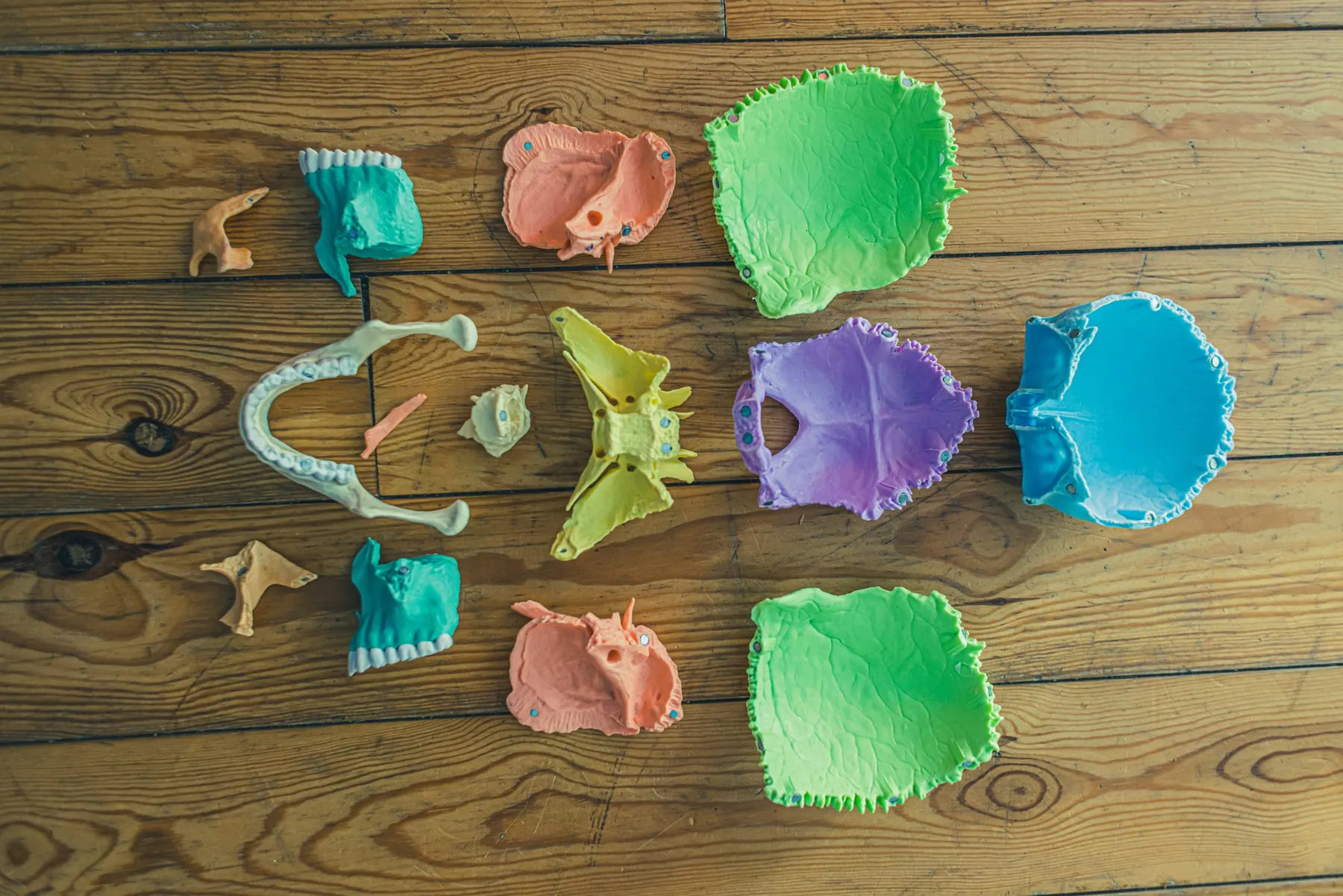

Every piece has meaning
What you feel, think and remember is not broken. These are parts that have not found their place yet.
No rush
The pieces come together slowly, when there is enough safety and support.
Feeling whole again
Integrating does not mean forgetting. It means the loss becomes part of your story without taking up all of it.

A breath to calm the body
A simple practice you can do right now, when your thoughts keep spinning.
- Place one hand on your chest and the other on your belly. Notice the contact.
- Breathe in through your nose for a count of 4, letting your belly gently rise.
- Breathe out for a count of 6, without forcing.
- Repeat 5 to 10 times. A longer out-breath helps the nervous system settle.
- Before you finish, ask yourself: what do I notice in my body now?
Writing to ease the weight
Take a notebook and write for ten minutes, without correcting or rereading. Choose one of these questions:
- What would I like to tell you that I couldn’t say?
- What do I miss most?
- What do I need today, just today?
- What has held me this week?
